Planting vegetables with Native American music

This past week we planted 10,000 sweet potato starts.

It is a ‘one-at-a-time’ hand process….so a number of us spent a lot of time on our hands and knees in the field.

We are done!

Jesse, one of my farmer partners, brings a small speaker into the fields. On an early morning we were planting to Native American music.

We named our property Shewatuck Farm – a name the Narragansett Indians used for the area.

We’ve done a good deal to diversify the landscape…adding bird houses and other conservation improvements.

As we planted there were a variety of birds…..definitely watching our progress! A hawk, plovers (we are reasonably near the sea), and different chirping birds.

It was altogether a lovely experience.

I had a real sense for the early Narragansett Indians.

Hopefully we continue to make the connection between plants, animals, and our preceding human inhabitants.

Issues with creating a sustainable regenerative agriculture in America

Issues (Not in any particular order of importance)

  • Price Manipulation

The price of vegetables and other specialty crops – even certified organic vegetables and specialty crops – is driven by a cheap (in many cases illegal) farm and food processing labor system. USDA in 2017 estimated that approximately 50 percent of specialty vegetables were grown by illegal immigrant labor.

It is, for all practical purposes, a pirate economy – heavily defended by large agri-business enterprises.

There have been recent efforts in Congress to further manipulate this illegal system by granting undocumented farm workers special immigration status (not as an effective method to reform immigration laws, but as a legislative ‘gimmick’ to allow a manipulated and exploitive economy to continue without political criticism).

Small scale certified organic producers using sustainable practices are at a severe pricing disadvantage. Many resort to various forms of volunteer labor to supplement their production systems and allow them to financially survive.

  • Nutrition and Food Health

A major (and inobvious) contributing factor to declines in global biodiversity has been changes in diet (and demand for food by type) driven by the green revolution. The green revolution globally saved many from starvation and nutrition deficient disease. It also narrowed diets and replaced diverse whole foods with foods derived from grains.

  1. Issues with lack of diversity in agro-ecology.
    1. American agriculture (and the political economy of American agriculture) has become narrowly focused – grains and confined animal operations.
    2. Diverse, specialty farming has lacked significant support from both USDA and congress.
    3. Knowledge of diverse agro-ecology has declined precipitously with the concentration of crops and ownership in agriculture.
    4. Issues with nutrition education.
      1. Nutrition education in the early public education system has been neglected.
      2. A large body of historical and current nutritional knowledge seems to find little educational support.
    5. Issues with medicine’s knowledge of nutrition.
      1. General medicine has, until recently, neglected nutrition as part of general healthcare practice.
      2. Historical knowledge of nutrition and the benefits of various plant based remedies has also been neglected.
  • Land Access…Cost of Land…Real Estate Appraisal of Agricultural Land

A major issue limiting the expansion of sustainable, regenerative farm practice has been the cost of land. This varies regionally, but is generally at the top of local ag advocates’ list:

  1. Midwestern lands and western lands have ‘some’ limited standard real estate appraisal methods to evaluate the agricultural qualities of land as a factor in financial valuation. Even in those highly agricultural areas the ability to evaluate agro-ecological factors is severely limited. In many parts of the country agricultural lands receive standard comparable price analysis. For example, the real estate appraisal for our 91 acre Rhode Island purchase in late 2017 compared the property to other open land with vary dissimilar agro-ecological properties (and no comparison of soils).
  2. Most landowners allow lease periods that are too short for agricultural planning purposes. The interest in potential development of land – and a chance to sell property into development at a high price – drive the interest of landowners to constrain lease periods. Also, many times land trusts and governments also constrain their land use leases (I have never researched the underlying issues.).
  3. Much of the national and regional political interest has been with distribution and food hubs. The needs to increase organic, sustainable production and expand value-added processing related to that expansion has been politically and financially neglected in my opinion. I have seen examples of food hubs that immediately have sourcing issues and react by compromising their initial regional mission. Our local farmer’s market organizer and distribution group, Farm Fresh RI, has needed to reinvent both who they serve and how broadly they serve in order to maintain their political role in the community. They are developing a $16M food hub building …in the end It appears to me it will look like a conventional food distributor and real estate lease agent….a completely different ethic than the original intent of the socially responsible Brown University students that founded the organization.
  • Cultural issues

Twenty-five years of work on environmental issues, agro-ecology, ecological economics, and agriculture have led me to the sense that the major impediments to evolving a more robust sustainable, regenerative agriculture are cultural[KE4] .

  1. We now have acutely deteriorated rural communities and rural community institutions –decline in societal institutions that maintain social cohesion (decline in churches, small business and small business organizations, etc.)
    1. Public educational institutions have focused on ‘measured’ education…at the expense of a deeper understanding of civics, culture, home economics, etc. My older daughter at this point in her life is a third grade teacher in a public school system. She graduated from Skidmore College with a double major in child development and American studies. She did her teacher training in a Waldorf school…then began a community school in a poor area of Providence with four other women. She loves her work at developing young minds and bodies – she tolerates all the ‘measurements’ and finds it harmful in certain cases.
    2. State and local governments have become increasingly materialistic and bureaucratic – utilizing statutes and law to counter profound cultural issues. This becomes sadly troubling and petty in many cases. They are, governmentally, sincere attempts to encourage healthier behaviors – the problem is the ethical dilemma that occurs with legislating personal behavior.
    3. I am a strong advocate of free, just markets – but do not see how we survive long as a society with our current concentrations of politico-economic power.
    4. All of the above has led to a significant number of culturally narrow and poorly educated citizens with little ability to make thoughtful, healthful decisions.
  • Equipment issues

Because of the small scale of organic certified vegetable and specialty crop farming there is limited innovation in equipment (not enough demand for equipment manufacturers to invest).

Needs

  1. A large capital pool for landholding – a partnership between farmers and pool management – structured as some form of quasi-governmental ‘charity’ because it will need for many years to subsidize land costs.
  2. A national effort to reform land grant universities and other technical colleges – to broader their curriculum, reevaluate their applied science education, and expand healthy methods for their experimental/trial farms and nutrition programs. Some have made changes to their trial farms and nutrition education…which is great…but I do not think it broad (this needs a study). As an aside, for two years I have been engaged with my undergraduate engineering and science school to utilize the food program… expanding it to a working farm…as an early stage method to broaden engineering education.
  3. Equitable Compensation Methods…breaking through a pricing structure based upon cheap (and in many cases illegal) labor. This is an extremely complex political issue with much of the agricultural capital invested in maintaining the status quo of concentrated ownership.
  4. Seasonal capital for farms and seasonal value added food production.
  5. A subsidized capital pool to provide incentives to equipment manufacturers and technical colleges to develop a new generation of farm equipment.

A Final Observation

There are two current societal positions I find false:

  1. That the best wealth creation occurs by limiting ownership and driving down costs. I believe broad ownership – and dynamic interaction between owners – creates the best environment for wealth creation.
  2. That an agriculture based upon small scale landowners cannot ‘feed the world’. There are a number of studies that show diverse, distirbuted farm operations can feed an ex0panding population with a more resilient, disease resiilient, disease resistant agriculture.

A Troubled Economy

For me, the most dramatic thing in our current ‘coronavirus political economy’ is how troubled we seem to be as a society.

There are a number of factors:

  1. It is a VERY contagious virus….so good reason to curtail activities outside the home.
  2. To curtail activities outside the home is hugely traumatic for our political economy.
  3. Local communities are extremely dependent on global logistics.
  4. Our economy is financially dominated by large corporations that depend on global logistics, cheap labor, and local residents going about purchasing their goods.
  5. The stability of financial markets depends on trust in large corporations. If investors no longer financially trust the corporations they are going to flee the market.
  6. Once investors begin to flee the markets all of the derivative financial instruments become suspect – even the derivative markets meant to protect certain industry segments (commodity futures, for example).

Add to that list:

  1. We have grown much more secular as a society; therefore our basis for faith and trust is now much more material.
  2. Our national government has grown extremely superficial and unable to collaborate on important issues.
  3. Our heroic figures are predominantly athletes…along with some media and film personalities.

All of those items are good reason to be troubled.

I would hope that we become more clearheaded on an economy that is locally sustainable while marketing local surplus.

The Relationship between Mental Health, Nutrition, Physical Activity, and Engagement with Nature

Somewhat over two years ago I began a conversation with the administration of my undergraduate school, Rose-Hulman Institute of Technology, on use of a portion of their new land acquisition for a campus sustainable, organic farm.

My premise was an interest in broadening the psychosocial aspects of the student experience – specifically around the theme of sustainability.

It was very directly driven by my own life and the lives of my family and close business colleagues.

There were a number of underlying hypotheses:

  1. Current uses of personal computers and handheld devices have profoundly changed how we interact as a species – acutely so with young people.
  2. How we eat, what we eat, and how we interact when we eat is critical to human health.
  3. The degree to which we are conscious of our bodies – and physical activity that aids body awareness – greatly enhances human health.
  4. Interaction with biodiverse ecologies in different weather conditions aids human health – particularly regular early morning biodiverse interactions.
  5. The term ‘mental health’ is, for me, too narrow. It rests upon old notions of material differences between mind and body – differences that I find artificial and biologically illogical (physiologically we are complex material beings – not ‘pieces of anatomy’).
  6. The Rose-Hulman campus, although pleasant, limits student interaction with the natural world. This is true of most college campuses.

From my visits to campus there appears to be a great need for mental health services – and I assume a similar need to identify students in need of mental health care.

I fundamentally question whether individual counseling can be effective with young students who have, in many cases, profoundly altered their human and natural interactions through the use of electronic devices –and the resulting changes that occur with family, friends, and interactions with nature.

Unless counseling takes a broad biological and sociological health perspective, I think it has limited value.

I also think solutions to the health problems of current students need to be long term and incremental. Most of the health problems that bring students to mental health clinics have been evolving for much of their lives – and do not lend themselves to easy solutions.

Many of my motivators for proposing a campus farm were based upon an interest to greatly diversify biological experiences for students utilizing both plants and animals. I also believed it would expand student and faculty perspectives on Rose-Hulman’s specialized academic programs.

How we integrate learning and knowledge with compassion, affection, and caring behaviors will be critical to addressing the increasingly acute health problems of young people.

Update

My apologies, but events have taken my attention from blogging.

During the absence, I’ve done a good bit of thinking and research related to the societal impacts of creating a ‘family farm’ training operation.

Most of the research has revolved around thinking about family.

I’ve previously blogged about some of the social implications/problems with our ‘self’ orientation.

The more I look at law over the past 60 years, the more problems I see…and the more destructive I see law with respect to family and community.

The great irony is that the entire purpose of law is to maintain society. If our law begins to ‘prioritize’ the individual over the family and community, then the law and the judicial system becomes a contradiction to its’ purpose.

Certain parts of our legal system have specifically lost sight of core judicial meaning. Family Court in my region is now almost exclusively about individuals. As a result it has degraded to a petty, materialistic bickering forum.

When we began the farm incubator initiatives I did not realize that we were headed into the eye of an enormous and destructive social storm.

I had some understanding of the condition of the agricultural economy and rural communities. The relationship between those conditions and our national judicial system was not as obvious.

For a country that was formed specifically to structure a government to limit the power of any individual (and structured amazingly well to achieve that end) we have lost our way.

Some recent writers have put the dilemma in terms of our societal ‘soul.’

I think a great many in our society have the desire for a healthy soul.

My concern is more that a very, very small number of self-interested individuals have had some success at changing our legal system to alter the course of our national history…and the explicit intention of the founding citizens to, as they put it, structure a society around law and God.

Selfish actions with the law have pitted people against people in the most harmful way – the destruction of family and community.
The Economic Arts

A few years ago Wendell Berry made a speech with the following paragraph:

But I would insist that the economic arts are just as honorably and authentically refinable as the fine arts. And so I am nominating economy for an equal standing among the arts and humanities. I mean, not economics, but economy, the making of the human household upon the earth: the arts of adapting kindly the many human households to the earth’s many ecosystems and human neighborhoods. This is the economy that the most public and influential economists never talk about, the economy that is the primary vocation and responsibility of every one of us.

The making of a household has for almost 40 years been a central part of my health (or lack of health). Over the past two years my ability to make a household has been interrupted – both in the practical sense and in the psychological sense.

My home literally ‘fell apart’.

During those two years, I have allowed the practical part of homemaking to become disjointed, uncertain, uncomfortable, and unhealthy.

It has pointed out how important and sustaining is the work of the homemaker.


Family

This morning I went to a favorite breakfast spot in Warren, Rhode Island.

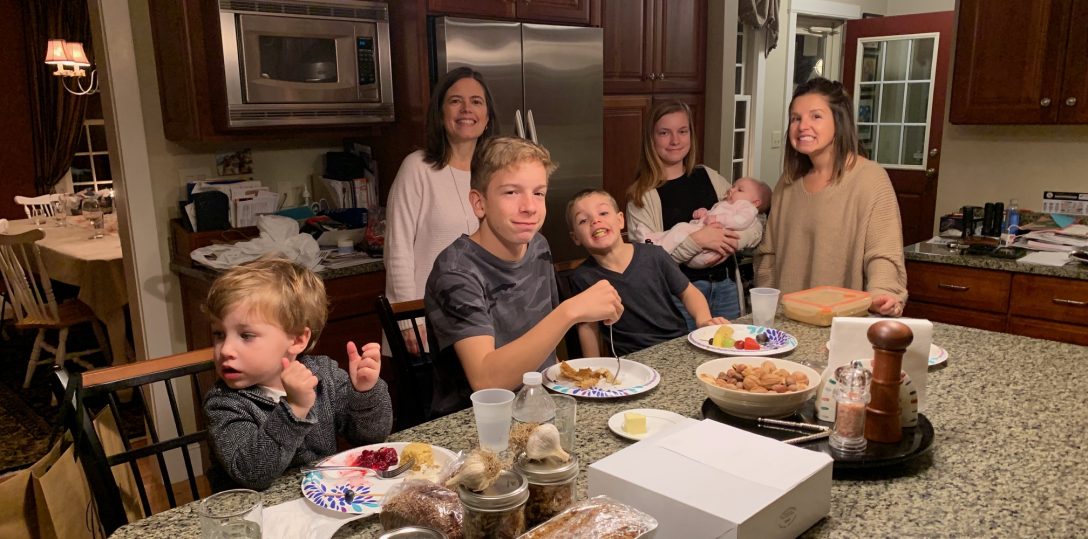
They have a community table and I ended setting with a young couple and their 4 children.

It was remarkable for several reasons:Roblox HackBigo Live Beans HackYUGIOH DUEL LINKS HACKPokemon Duel HackRoblox HackPixel Gun 3d HackGrowtopia HackClash Royale Hackmy cafe recipes stories hackMobile Legends HackMobile Strike Hack

  1. Seldom in my community do I see larger families..particularly out for meals.
  2. The children ranged in age from 4 to 8. The three boys were ‘stairsteps’ (another term I never hear in this community for progressive births). The youngest, a girl, was a foster child.
  3. They were lovely children…but active…so I was helping a bit…and find both parents (probably early 30s) grew up on farms.

It was a lovely breakfast.

Abraham Lincoln’s Gettysburg Address

November 19th is the 150th Anniversary of Lincoln’s Gettysburg Address. Ken Burns is asking people to read and recite his short, but eloquent speech….

Four score and seven years ago our fathers brought forth on this continent, a new nation, conceived in Liberty, and dedicated to the proposition that all men are created equal.

Now we are engaged in a great civil war, testing whether that nation, or any nation so conceived and so dedicated, can long endure. We are met on a great battle-field of that war. We have come to dedicate a portion of that field, as a final resting place for those who here gave their lives that that nation might live. It is altogether fitting and proper that we should do this.

But, in a larger sense, we can not dedicate — we can not consecrate — we can not hallow — this ground. The brave men, living and dead, who struggled here, have consecrated it, far above our poor power to add or detract. The world will little note, nor long remember what we say here, but it can never forget what they did here. It is for us the living, rather, to be dedicated here to the unfinished work which they who fought here have thus far so nobly advanced. It is rather for us to be here dedicated to the great task remaining before us — that from these honored dead we take increased devotion to that cause for which they gave the last full measure of devotion — that we here highly resolve that these dead shall not have died in vain — that this nation, under God, shall have a new birth of freedom — and that government of the people, by the people, for the people, shall not perish from the earth.

Political ‘Shock Wave’

Just a few weeks ago, McInturff had characterized the high negative ratings for Congress and the president as “ripples that will take a long time to resolve.” But McInturff is revising and extending his remarks.

“Ripple,” he says, was way too careful.

The word he’s using today is “shock wave.” He says his new polls have broken all records for a generation of NBC/WSJ polling data. He found:

The lowest rating for Obama of his presidency;
The lowest positive rating for the Republican Party;
And for the first time ever, a majority of people choosing not to identify with either political party.

A majority of people choosing not to identify with either political party!

The NPR Report